Ultimate Wedding Budget Planning Guide: 2025-2026 Edition
Master your wedding finances with our ultimate wedding budget planning guide. Learn current costs, hidden fees, and expert saving strategies for 2025 and 2026.

- Venue and catering typically consume 35-50% of the total budget.
- Always include a 10-15% contingency fund for unexpected "hidden" costs.
- Priority-based spending is the only way to avoid the "Pinterest Trap."
Planning a wedding is often described as a whirlwind of romance and champagne, but let’s be honest: it’s mostly a complex exercise in logistics and financial management. Without a solid ultimate wedding budget planning guide, that whirlwind can quickly turn into a category-five financial hurricane. Whether you are dreaming of a grand ballroom affair or a chic city-center micro-wedding, understanding the economic landscape of 2025 and 2026 is the first step toward walking down the aisle without a mountain of debt following close behind.
The "average" wedding is a moving target, influenced by inflation, regional demand, and the ever-evolving "must-have" trends. To help you navigate these waters, we’ve broken down the essential facts, figures, and strategies you need to build a budget that actually works.
The Financial Reality: Wedding Costs in 2025 and 2026
Before you start picking out centerpieces, you need to know the market rate. In 2025, the "sticker shock" is real. In the USA, couples should expect to spend between $30,000 and $33,000 on average. However, there is a significant divide: many couples are successfully staying under $25,000 by making strategic choices regarding guest counts and dates.
Across the pond in the UK, the average cost for 2025 is estimated at £25,625, representing a 3.7% increase from 2024. These numbers aren't meant to scare you; they are meant to ground your planning in reality.
The Impact of Geography
Where you say "I do" is often more expensive than the "what" or "who."
- High-Cost Hubs: A wedding in London (£36,778) or New York City ($45,000+) can easily cost double the national average.
- Value Regions: Rural areas like Wales (£15,529) or Louisiana ($18,000) offer significantly more "bang for your buck."
Tip
The "Big Three" Percentages
When you begin how to create wedding budget strategies, you’ll find that three main categories will dominate your spending. If you get these right, the rest of the budget usually falls into place.
| Category | Budget Allocation | Includes |
|---|---|---|
| Venue & Catering | 35% – 50% | Room hire, food, alcohol, service staff |
| Photography & Video | 10% – 12% | Full day coverage, albums, engagement shoot |
| Decor & Florals | 8% – 15% | Bouquets, centerpieces, lighting, rentals |
The Guest Count Reality
The most effective way to lower your budget is to trim the guest list. In 2025, the average cost per guest is roughly $75–$150 (£65–£150) for food and drink alone. When you factor in the extra table rentals, linens, invitations, and favors, adding just 10 guests can easily inflate your bill by $1,500.
Heads up
The Non-Negotiable Rules of Wedding Budgeting
To keep your sanity (and your savings), Alistair’s first rule of wedding humor is: Don't laugh at the bill; plan for it. Here is how to approach the planning process like a pro.
1. Establish Your "Big Three" Priorities
Sit down as a couple and decide what actually matters. Is it a five-course meal? A legendary live band? Or a photographer who makes you look like movie stars? Allocate funds to these top three priorities first. Be ruthless with the rest. If you want the free wedding budget planner experience, you have to be willing to cut the things you don't actually care about.
2. The 15% Buffer
Professional planners recommend a 10–15% contingency fund. This isn't "extra" money for a better dress; it's a safety net for service fees, last-minute guest additions, or the "rain plan" tent you didn't think you’d need.
3. Tech-Enabled Tracking
Gone are the days of scribbling on napkins. Use digital tools to track every cent. Recording small expenses like postage, marriage license fees, and vendor tips prevents "death by a thousand cuts." You can start by using a wedding budget calculator to get an initial projection.
Do this
From the OurVows workspace
Mapping out your budget?
Set category targets, log every payment, and see exactly where you stand — no spreadsheet required.
Modern Trends Shaving (and Adding) to the Budget
As we move into 2026, the way couples spend money is shifting. Tradition is taking a backseat to "guest experience."
The Rise of the Micro-Wedding
We are seeing a surge in "true" micro-weddings (under 20 guests). Interestingly, couples aren't just trying to save money; they are spending more per guest on high-end experiences like 7-course tasting menus or weekend retreats, while still spending less overall than a 150-person traditional wedding. Check out these 10 guest wedding ideas for inspiration.
AI and Automation
A growing number of couples planning for 2026 are using AI tools for floor plan layouts, initial vendor outreach, and budget tracking. This can save you hours of consultant fees if you are willing to do some of the digital heavy lifting yourself.
The "Content Creator" Expense
A new vendor category has emerged for 2025. Couples are now budgeting $500–$2,000 for a "Wedding Content Creator." This person isn't a photographer; they are there specifically to capture social-media-ready "behind the scenes" footage on a smartphone for instant posting.
"Vibe-Led" Spending
Instead of "luxury" for luxury’s sake, 2026 is about interactive guest experiences. Think custom grazing tables, live painters, or even tarot card readers. To afford these, many are swapping expensive fresh flowers for high-quality silk or rented "sculptural" decor to stay within their how to pay for wedding limits.
Common Mistakes to Avoid
Even the most meticulously planned budget can be derailed by these common pitfalls.
The DIY "False Economy"
Many couples believe doing it themselves is always cheaper. However, if you have to buy specialized tools, craft supplies, and spend 40 hours of your own time, it often costs more than hiring a professional. Plus, a professional brings insurance and experience.
Underestimating "Hidden" Fees
Always read the fine print. Many venues and caterers charge a service fee (often 20%+) that is not a tip for the staff. Other often-forgotten costs include:
- Dress alterations ($500+)
- Marriage license fees
- Vendor meals (you must feed your photographer and DJ!)
- Beauty trials
Note
The Pinterest Trap
Comparison is the thief of joy—and the thief of your bank account. Trying to replicate a "maximalist" Pinterest board without a $50,000 decor budget leads to stress and overspending. Focus on the vibe, not the specific $200-per-stem orchid.
Frequently asked questions
How much should we actually budget?
Who pays for what in 2025?
Is a backyard wedding cheaper?
Should we hire based on the lowest price?
How do we handle unexpected price increases?
Conclusion: Planning for a Joyful Start
Ultimately, your wedding is a celebration of a marriage, not just a one-day production. By using this ultimate wedding budget planning guide, you are setting the foundation for a financially healthy future together. Focus on your priorities, keep a close eye on the "Big Three," and don't let the pressure of social media trends dictate your bank balance.
If you find the national averages a bit daunting, remember that beautiful weddings happen at every price point. Whether you are working with a $10000 wedding budget or something much larger, the goal remains the same: a day that reflects your unique story.
Ready when you are
Ready to Start?
Use our interactive tools to build your perfect wedding plan today.
Ready when you are
Plan your wedding without the chaos.
Free forever for couples just getting started. Two minutes to set up. No credit card.
Keep reading

The Ultimate Wedding Budget for 150 Guests: 2025-2026 Planning Guide
Planning a wedding for 150? Discover the real costs, hidden fees, and expert tips for managing a wedding budget for 150 guests in the 2025-2026 season.

Mastering Your Wedding Budget Priorities: A Guide for 2025–2026
Navigate 2025–2026 wedding costs with expert advice on wedding budget priorities, hidden fees, and modern trends like AI and experiential spending.
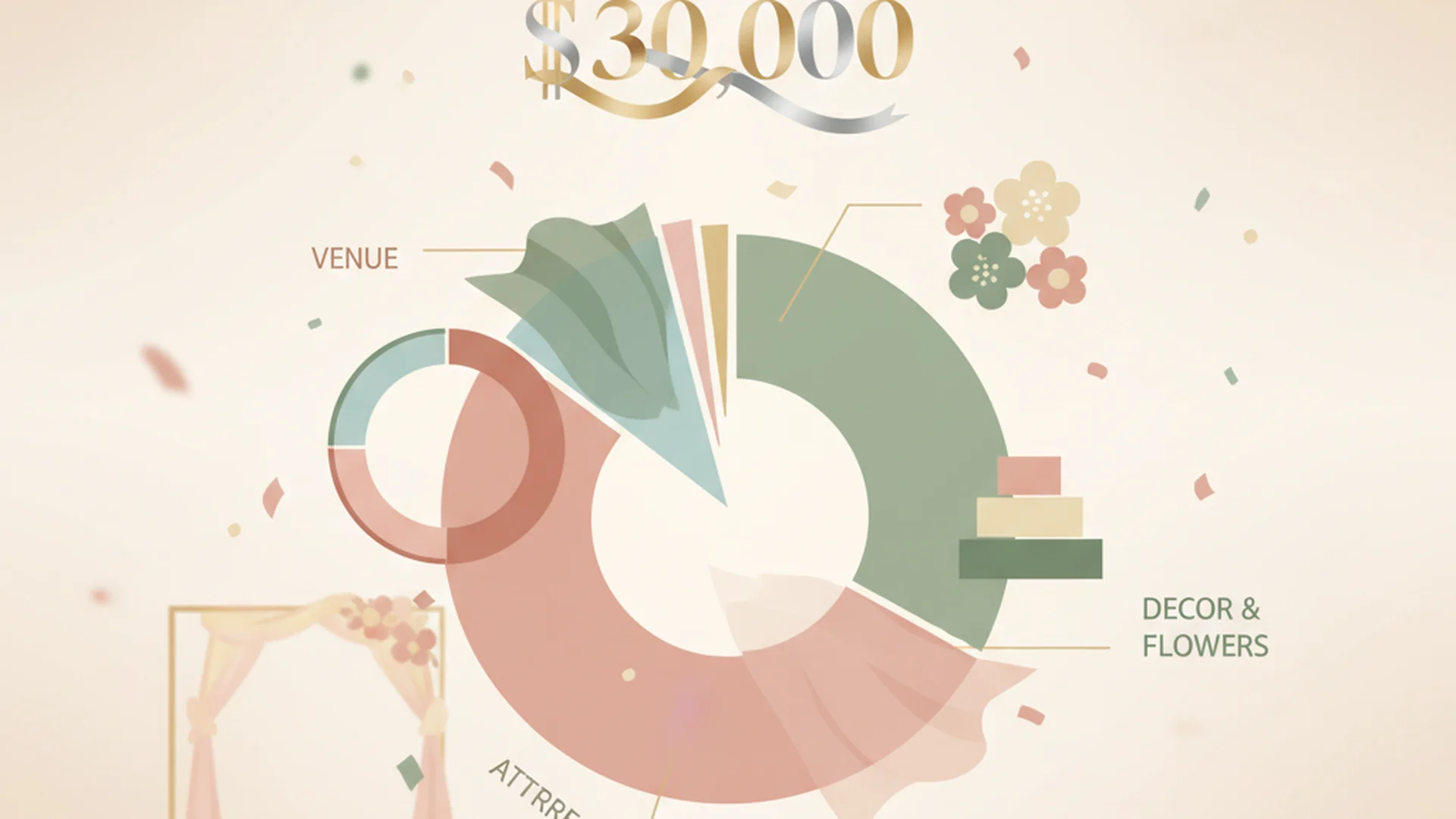
The Ultimate $30,000 Wedding Budget Breakdown for 2025-2026
Planning a wedding on a $30,000 budget? Discover a strategic breakdown of costs, 2025-2026 trends, and expert tips to maximize every dollar for your big day.