Navigating the Divorced Parents Seating Chart: A Diplomatic Guide for 2025-2026
Learn how to design a divorced parents seating chart that maintains peace and honors family. Expert tips for ceremony and reception layouts in 2025.
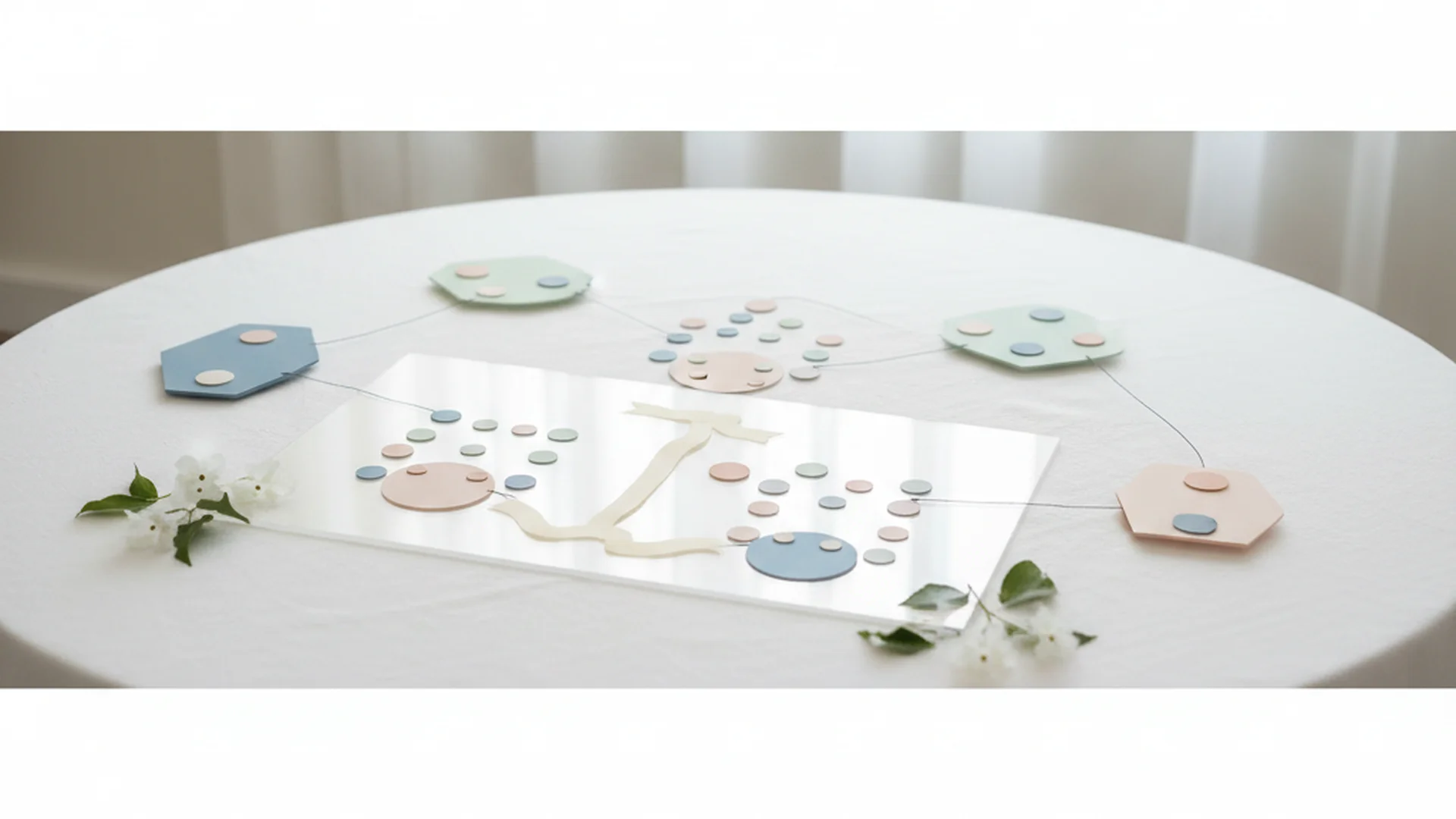
- Communication three to four months prior is essential for harmony.
- "Honored Guest" tables are the 2025-2026 alternative to the traditional head table.
- Digital tools like AI-optimized seating can solve complex family puzzles mathematically.
Planning a wedding is often described as a joyful journey, but for those navigating the "Blended Brideland," it can feel more like a high-stakes diplomatic mission. One of the most common stressors couples face today is the divorced parents seating chart. With roughly 40% to 50% of marriages ending in divorce, modern couples are frequently tasked with balancing the needs of biological parents, step-parents, and long-term partners who all deserve a place of honor.
In my work as a relationship counselor, I’ve seen how seating arrangements can either soothe old wounds or inadvertently reopen them. The goal isn't just to find a place for everyone to sit; it’s to create an environment where you, the couple, can focus on your vows without scanning the room for potential conflict. This guide will walk you through the logistics, etiquette, and modern trends of seating for divorced parents to ensure your big day remains a celebration of love.
The Modern Reality of Blended Families
The traditional rules of wedding etiquette were written for a different era. Historically, the "host" (traditionally the bride’s parents) occupied the most prominent seats. However, with most modern couples now contributing significantly to their own wedding costs, the "who pays, stays" rule has largely been replaced by a more nuanced approach to family harmony.
Today, we see the "Eight-Parent Phenomenon." If both the bride’s and groom’s parents have remarried, you aren't just seating four parents—you are seating eight "parental" figures. This shift requires a move away from rigid, linear thinking toward more creative, flexible seating arrangements.
Tip
Ceremony Logistics: Managing the Aisle
The ceremony is the most visible part of the day, and the first few rows carry immense symbolic weight. If your parents are divorced, the traditional "Mom in the first seat, Dad in the second" can create tension.
The "Buffer" Strategy
In a single row, use "buffers" to prevent direct contact between high-conflict individuals. This could be a sibling, a beloved grandparent, or a neutral family member. For example, the row might look like: Mother of the Bride, Brother, Grandmother, Father of the Bride. This provides physical and emotional space.
The "Switch Sides" Technique (2025 Favorite)
A growing trend for 2025 and 2026 is seating the bride’s parents on the groom’s side of the aisle and vice versa. Why? Because this allows parents to see their own child’s face during the vows rather than just their back. If parents are divorced, this technique also provides more "front row" real estate, as you can spread parents across both sides of the aisle, giving everyone a VIP view without forcing them to share a bench.
Row Assignments
If the parents cannot be in the same row comfortably, the standard procedure is to place the parent who was the primary caregiver (or the one you are closest to) in the first row. The other parent is then seated in the second row.
Heads up
Reception Layouts: From Sweetheart Tables to Serpentine Seating
Once the "I dos" are done, the reception presents a new set of puzzles. How do you handle the Head Table Seating Arrangement when your parents are no longer a unit?
The "Honored Guest" Tables
Instead of one large head table, many couples are opting for multiple "VIP Tables." These tables surround a central Sweetheart Table (just the couple). Each set of divorced or remarried parents acts as the "Head" of their own table. This gives each parent the status they deserve without requiring them to share bread with an ex-spouse.
Serpentine and S-Curve Tables
Moving away from rigid rounds, "serpentine" layouts are trending for 2026. These winding tables create organic breaks. You can seat one side of the family at one "curve" and the other side at a different curve. It looks like one continuous, beautiful table, but naturally separates groups who might not get along.
Kings Tables
If you want to sit with your family, a Kings Table Wedding Setup is a great option. This is a long, wide table where the couple sits with their wedding party and their partners. By surrounding yourselves with your best friends, you create a "buffer zone" between you and any parental tension.
| Layout Style | Best For | Level of Diplomacy |
|---|---|---|
| Sweetheart Table | High-conflict parents | Highest |
| Kings Table | Close-knit wedding parties | Medium |
| Serpentine Tables | Large blended families | High |
| Traditional Head Table | Low-conflict/Unified families | Low |
Tech Corner: Using AI and QR Codes to Solve the Puzzle
The days of moving sticky notes around a poster board are over. In 2025, digital solutions are making the divorced parents seating chart much easier to manage.
- AI-Optimized Seating: New platforms like AutomatedSeating use algorithms to group guests based on "interest" tags and "avoidance" tags. You can literally tag "Mom" and "Dad" with an avoidance marker, and the AI will calculate the optimal distance between them while still keeping them in high-status positions.
- 3D Floor Plans: Tools like Digital Wedding Seating Chart platforms allow you to visualize the line of sight. You can ensure that Dad isn't staring directly at Mom's new husband all night.
- QR Code Seating Charts: To avoid the "bottleneck" at a physical seating board—where parents might feel awkward looking for their names together—2026 weddings are using aesthetic QR code signs. Guests scan the code to see their table on their own phones, allowing for a more discrete experience.
Note
From the OurVows workspace
Solving the seating puzzle?
Drag-and-drop tables, relationship warnings, and printable charts — built into your guest list.
Crucial Conversations: How to Talk to Your Parents
As a counselor, I cannot stress this enough: do not wait until the week of the wedding to discuss seating. You should begin these conversations three to four months in advance.
The Individual Ask
Sit down with each parent separately. Ask: "Where would you feel most comfortable?" and "Is there anyone you’d prefer not to sit directly next to?" By giving them a voice early, you reduce the likelihood of a "scene" on the day.
Setting Boundaries
It is okay to say: "I want both of you to feel honored, but I also need this day to be about [Partner's Name] and me. I’ve designed the seating to make everyone as comfortable as possible."
Do this
Real-World Examples
Example 1: The "Equidistant" Solution
Sarah’s parents had a messy divorce and hadn't spoken in five years. Sarah chose a Sweetheart Table for herself and her husband. She then placed her mother at Table 1 and her father at Table 2. Both tables were exactly the same distance from the Sweetheart Table. By making them "equidistant," neither parent felt like the "second choice."
Example 2: The Stepparent Inclusion
Mark was very close to his stepfather, but his biological father was also attending. To avoid conflict, Mark used a Family Table Wedding Seating approach where he had two "Family Tables" instead of one. Table A held his Mom and Stepdad with their siblings. Table B held his Dad and his Dad's side of the family. Both were positioned in the front "VIP" zone.
Example 3: The Photographer’s List
Jillian knew her parents would be civil but didn't want the awkwardness of a forced "whole family" photo. She provided her photographer with a "Do Not Group" list. This ensured the photographer didn't accidentally ask the divorced parents to put their arms around each other for a photo, which could have ruined the mood for the rest of the night.
Common Mistakes to Avoid
- Forgetting the Step-Parent’s Partner: If a parent is remarried, their spouse must be seated with them. Separating a parent from their current partner to "keep the peace" with an ex usually backfires and creates more resentment.
- Assuming "They’ll Behave": Even the most well-meaning parents can struggle with the high emotions and alcohol involved in a wedding. Design the seating for the worst-case scenario, not the best.
- The "Invisible" Parent: Sometimes, in an effort to avoid conflict, a couple might tuck one parent into a corner. This is often noticed by other guests and can make you look like you are taking sides. Always aim for symmetry in "honor."
- Neglecting the Ushers: If you don't use "Reserved" cards for the ceremony, ushers may make split-second decisions that land your parents in the same row. Always use clear signage.
Frequently asked questions
Does the mother of the bride always get the front row?
Should step-parents sit at the front?
Where do parents sit if they can’t be in the same room?
Can I have a top table if my parents are divorced?
How do I handle seating if one parent is paying and the other isn't?
Conclusion
Creating a divorced parents seating chart is one of the most challenging parts of How to Make Wedding Seating Chart plans. However, by using a mix of modern technology, diplomatic communication, and creative layouts like Serpentine or Honored Guest tables, you can navigate this challenge with grace.
Remember, the goal of your seating chart is to facilitate joy. By taking the time to plan these details now, you are giving yourself the gift of a stress-free wedding day where the only thing people are focused on is your new beginning.
Do this
Ready when you are
Ready to Plan?
Use our interactive tools to build your perfect, conflict-free layout.
Ready when you are
Plan your wedding without the chaos.
Free forever for couples just getting started. Two minutes to set up. No credit card.
Keep reading

The Ultimate Guide to Choosing the Best Wedding Seating Chart App for 2025–2026
Discover how a wedding seating chart app can save you significant planning time. Explore AI-driven tools, 3D floor plans, and expert seating strategies for your big day.
The Ultimate Wedding Seating Chart Timeline: A Month-by-Month Guide
Master your wedding seating chart timeline with our expert guide. From early drafts to last-minute changes, learn how to organize your guests stress-free.
Mastering the Pivot: How to Handle Last-Minute Seating Chart Changes
Learn how to manage last-minute seating chart changes with expert strategies, 2025 tech trends, and the 5% buffer rule to keep your wedding stress-free.