Bonding Your Blended Family: The Complete Guide to the Family Medallion Ceremony
Discover how the Family Medallion Ceremony honors children in blended families. Learn about its history, symbolism, and modern trends for 2025-2026.
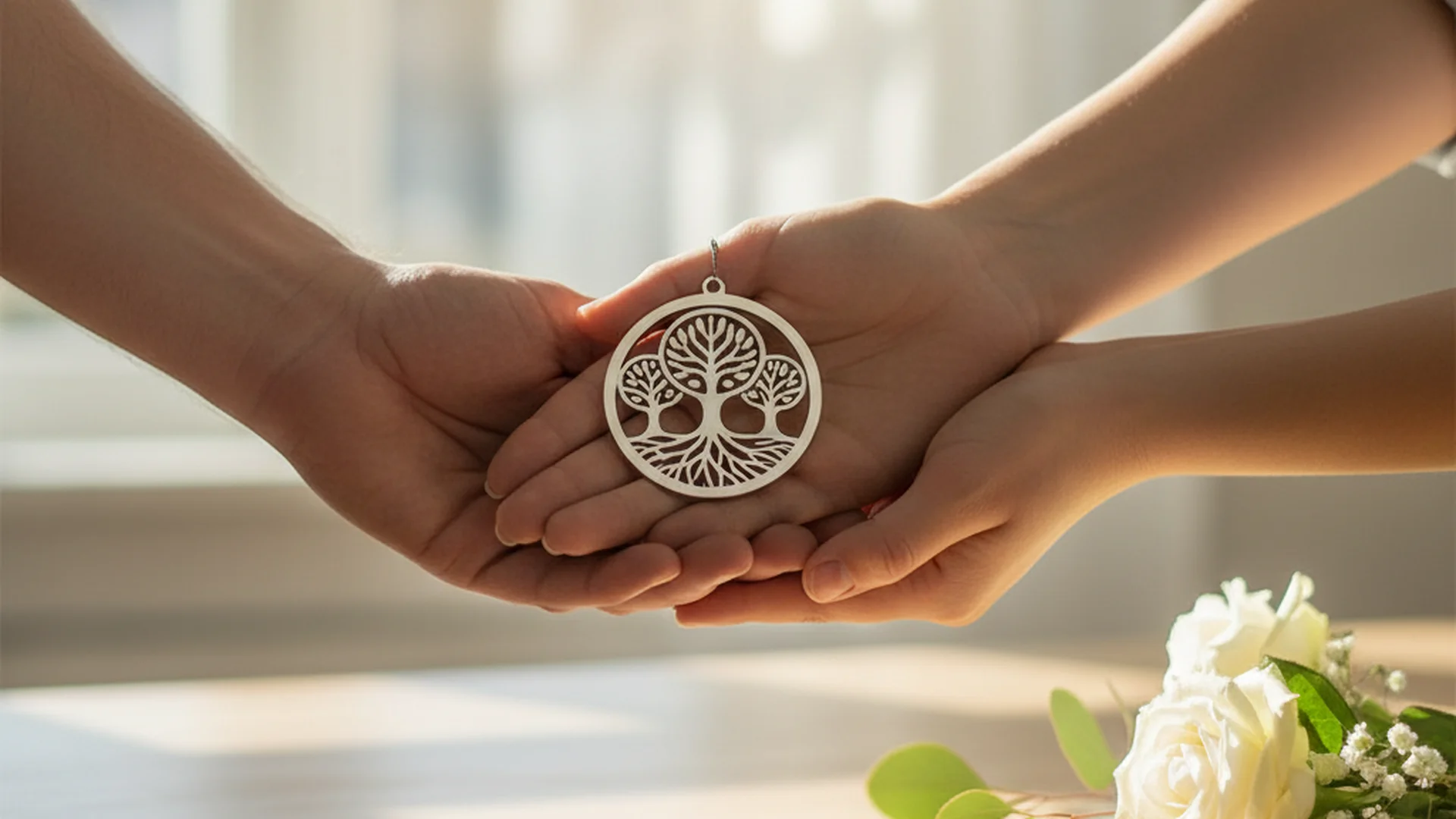
- The Family Medallion features three interlocking circles representing the expansion of love.
- It is a formal commitment from parents to children, not just between the couple.
- Modern 2025-2026 trends emphasize narrative storytelling and eco-conscious keepsakes.
For many couples, a wedding is more than the union of two individuals; it is the merging of two lives, two histories, and often, two sets of children. In the modern landscape of matrimony, the Family Medallion Ceremony has emerged as one of the most poignant ways to acknowledge that a marriage is the foundation of a new family unit. Unlike traditional vows that focus solely on the bride and groom, this ritual invites children to the center of the altar, signaling that their role in the new household is both recognized and celebrated.
As an interfaith officiant, I have seen firsthand how powerful it is for a child to receive a tangible symbol of belonging. Whether you are navigating a second marriage or finalizing an adoption, the Family Medallion Ceremony serves as a "Gift of Significance" that bridges the gap between being a "step" and being a "family."
What is the Family Medallion Ceremony?
The Family Medallion Ceremony is a contemporary ritual designed specifically to integrate children—biological, adopted, or stepchildren—into the formal wedding or family commitment service. At its core, it is a moment where the adults make a public promise to the children, acknowledging that the marriage bond extends to encompass them.
The origin of this ritual dates back to 1987, when Dr. Roger Coleman, a chaplain in Kansas City, recognized a glaring omission in traditional wedding liturgies. As the number of blended families began to rise, Coleman noticed that children often felt like spectators at their parents' weddings rather than participants. He created the Family Medallion to provide a formal "rite of passage" for these children.
The symbol itself consists of three interlocking circles. These circles represent the "reaching out" of love from the couple to the children, mirroring the way a marriage expands to create a larger circle of support and protection.
Note
Why the Family Medallion Matters in 2025
The relevance of this ceremony has never been higher. According to recent U.S. Census Bureau data (2023-2025), approximately 40% of American families are blended. Furthermore, an estimated 1,300 new stepfamilies are formed every single day.
In this context, a wedding is often a time of transition that can bring up complex emotions for children. By including a Family Medallion Ceremony, the couple sends a clear message of stability. It transforms the event from "my parent is getting married" to "we are becoming a family."
For couples looking for more inspiration on how to navigate these dynamics, exploring Blended Family Wedding Ideas can provide additional context on making the day inclusive for everyone involved.
How the Ceremony is Performed
The beauty of this ritual lies in its flexibility, but most officiants follow a standard structure to ensure the moment feels weighty and intentional.
1. The Timing
The ceremony typically occurs immediately after the couple exchanges their wedding rings and is pronounced married. This is the "sweet spot" of the service—the couple has made their commitment, and the very first act they perform as a married pair is to honor their children.
2. The Presentation
In most blended families, the stepparent presents the medallion to the child. This is a symbolic gesture of the stepparent’s commitment to the child’s well-being. If both parents have children, they may each present medallions to their new stepchildren simultaneously.
3. The Words Spoken
The officiant usually begins by explaining the symbol of the three interlocking circles. Following this, the parents may recite a "Parent’s Pledge."
Tip
4. The Token
The child is presented with a physical token—usually a necklace, lapel pin, or ring—featuring the three-circle design. This provides a physical "anchor" for the memory of the day.
| Recipient Age | Recommended Token Type | Why it Works |
|---|---|---|
| Toddler/Young Child | Necklace or Charm | Tangible and visible during photos. |
| Pre-Teen | Bracelet or Lapel Pin | Subtle but stylish for daily wear. |
| Teenager/Adult | Ring or Key Ring | Feels age-appropriate and sophisticated. |
3 Real-World Examples of the Ceremony
To help you visualize how this might look, here are three ways I have seen the Family Medallion Ceremony adapted for different family needs.
Example 1: The Surprise Gift
Sarah and David were marrying, and David had two young daughters. During the ceremony, David and Sarah knelt down to the girls' eye level. David spoke first, thanking the girls for welcoming Sarah into their lives. Sarah then presented them each with a silver Family Medallion necklace, promising to always be a "bonus" source of love and support. There wasn't a dry eye in the house.
Example 2: The Adoption Milestone
Mark and Elena had been fostering their son, Leo, for three years. On the day their adoption was finalized, they held a small family gathering. They used the Family Medallion to mark the transition from "foster" to "forever," using the "Gift of Significance" terminology to explain that Leo was now an equal and permanent part of their family circle.
Example 3: The "Launching" Ceremony
A trend we are seeing for 2026 involves using the medallion for older children. One couple used the ceremony not at their wedding, but when their daughter was leaving for the military. They presented her with a Family Medallion key ring to remind her that no matter how far she traveled, she was always connected to the family "circle" at home.
From the OurVows workspace
Planning a wedding is a lot. We make it feel like less.
Checklist, budget, guest list, and a wedding website — together in one free workspace built for both of you.
Modern Trends for 2025–2026
As wedding aesthetics evolve, so does the Family Medallion. Here are the top trends we are seeing for the upcoming seasons:
Bespoke Jewelry and Mixed Metals
While yellow gold was the standard for decades, 2025 trends favor silver, white gold, and "mixed metals." Many couples are choosing metals that match the "cool-toned" aesthetic popular in modern minimalism.
Narrative Ceremonies
There is a strong 2026 movement toward "Narrative Ceremonies." Instead of a standard script, the officiant tells a brief, specific story of how the children and stepparent bonded—perhaps over a shared love of hiking or a funny moment during a first family vacation—before the medallion is presented. This makes the ritual feel deeply personal rather than performative.
Eco-Conscious Keepsakes
Sustainability is a major priority for modern couples. We are seeing a rise in medallions made from recycled precious metals or created by designers who use ethical, lab-grown stones. This aligns the family’s values with the physical token they are giving their child.
Do this
Digital Integration
For families with relatives living abroad, 2025 weddings often include "livestream shout-outs." During the family portion of the ceremony, the couple may look into the camera and acknowledge the grandparents or distant relatives watching online, allowing them to witness the child being honored in real-time.
Common Mistakes to Avoid
While the Family Medallion Ceremony is a beautiful addition to any wedding, there are several pitfalls to watch out for.
- Putting the Child "On the Spot": Not every child enjoys being the center of attention. If your child is shy, do not force them to stand at the altar. Instead, present the medallion privately during the rehearsal or a quiet moment before the reception.
- Skipping the Rehearsal: Involving children adds a layer of unpredictability. Always practice the "Medallion Hand-off" to ensure you aren't fumbling with small jewelry clasps during a high-emotion moment.
- Misunderstanding its Purpose: It is a common misconception that this ceremony is only for "second weddings." In reality, many first-time marriages involve children born to the couple or from previous relationships. The ceremony is about family unity, regardless of how many times the parents have been married.
- Replacing Other Rituals: Some couples think they have to choose between this and a "Sand Ceremony." While both are unity rituals, the Family Medallion is distinct because it leaves the child with a wearable heirloom, whereas sand remains in a jar.
Heads up
Best Practices for a Seamless Ceremony
If you are planning to include the medallion in your service, follow these expert recommendations:
- Use the Right Language: Refer to the medallion as the "Gift of Significance." This emphasizes that the item is more than just jewelry—it is a symbol of their permanent place in the family.
- Consult Your Officiant Early: Not all officiants are familiar with the specific wording of the Family Medallion. Share your intentions early so they can integrate it smoothly into the script. If you're struggling with the right words, our Wedding Vow Writer can help you draft a Parent's Pledge.
- Consider the Child's Perspective: Ensure the child understands what is happening before the big day. Explain that the medallion is a "welcome gift" to the new family.
- Coordinate with Photos: Mention the ceremony to your photographer so they can capture the close-up of the medallion being placed on the child. These are often the most cherished photos of the day.
For more tips on incorporating your little ones into the big day, check out our guide on Including Children in Wedding Ceremony.
Frequently asked questions
When does the ceremony take place?
Who presents the medallion?
Can the ceremony be religious?
What if my child is an adult?
How much does a Family Medallion cost?
Conclusion
The Family Medallion Ceremony is more than just a trend; it is a vital response to the changing face of the modern family. By taking five minutes out of your wedding day to focus on your children, you provide them with a sense of security and belonging that can last a lifetime.
As you plan your journey toward a new family life, remember that the rings you exchange as a couple represent your love for each other, but the medallion you give your children represents a love that has grown large enough to hold everyone. It is, truly, the gift of significance.
Do this
Ready when you are
Ready to Start?
Craft the perfect promises for your blended family today.
Ready when you are
Plan your wedding without the chaos.
Free forever for couples just getting started. Two minutes to set up. No credit card.
Keep reading
Second Marriage Bridal Shower: Modern Etiquette and Trends for 2025
Discover the modern approach to planning a second marriage bridal shower. From 2025 trends to etiquette for encore brides and blended families.
25 Inspiring Second Marriage Wedding Ideas for 2025-2026
Explore modern second marriage wedding ideas, from intimate micro-weddings to blended family ceremonies. Plan your perfect encore celebration with expert tips.
Modern Mature Bride Wedding Ideas: Refinement and Authenticity
Discover 2025-2026 mature bride wedding ideas focusing on editorial elegance, high-fashion fashion, and meaningful rituals for the modern 40+ bride.